YouthPolicyCenter

doha tahiri

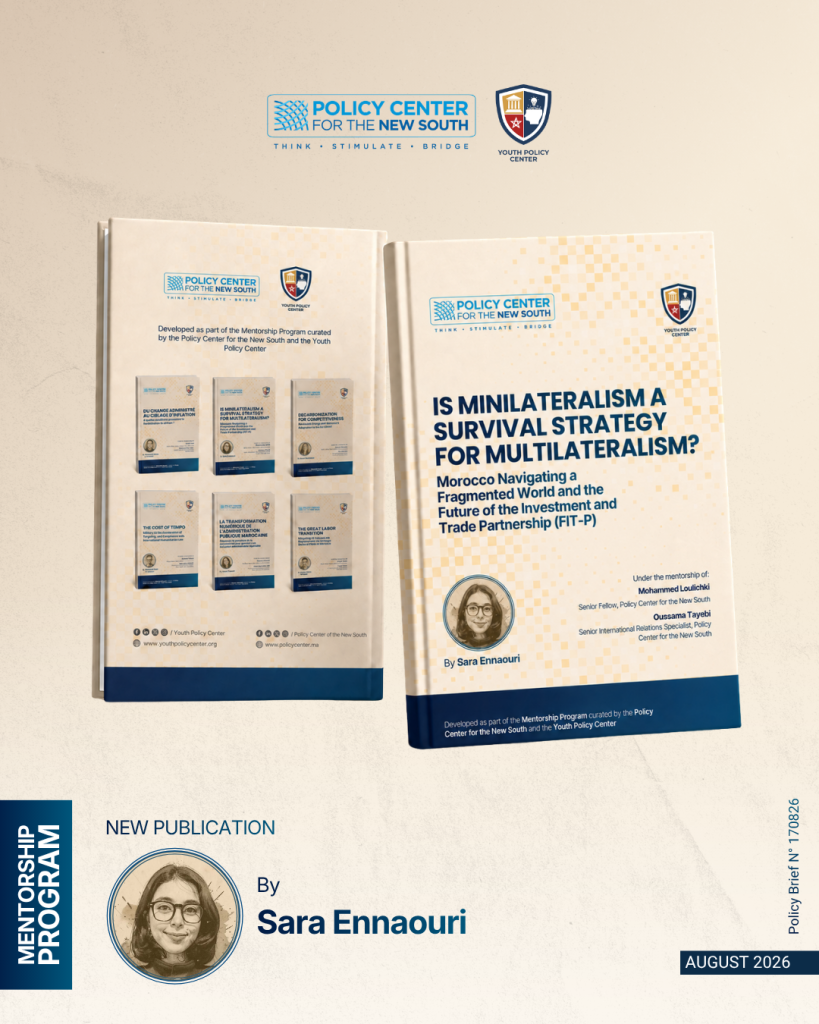
Is Minilateralism a Survival Strategy for Multilateralism? Morocco Navigating a Fragmented World and the Future of the Investment and Trade Partnership (FIT-P)

This Policy Brief explores the rise of minilateralism and analyzes Morocco’s diversified foreign policy strategy through the example of the Future of Investment and Trade Partnership (FIT-P), contributing to discussions on global governance and international cooperation.
Is Minilateralism a Survival Strategy for Multilateralism? Morocco Navigating a Fragmented World and the Future of the Investment and Trade Partnership (FIT-P) Lire la suite »

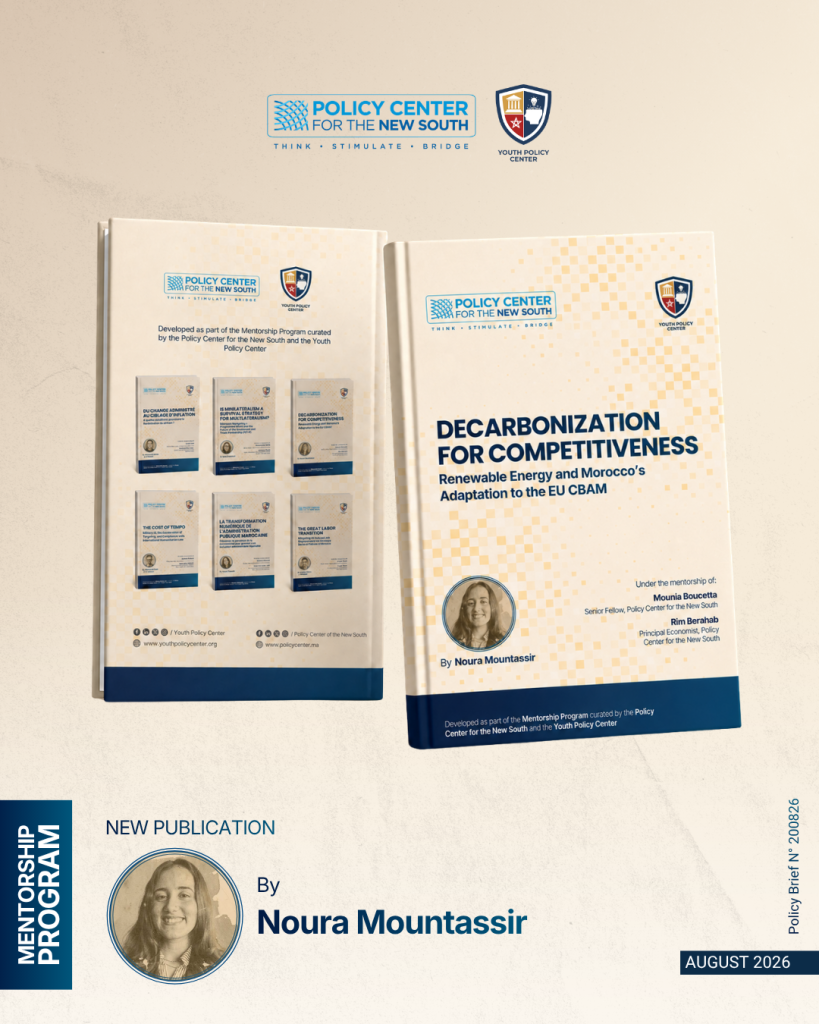
Decarbonization for Competitiveness: Renewable Energy and Morocco’s Adaptation to the EU CBAM

The publication highlights Morocco’s renewable energy potential and presents practical recommendations to strengthen industrial decarbonization, support green investment, and reinforce long-term competitiveness in international markets.

Decarbonization for Competitiveness: Renewable Energy and Morocco’s Adaptation to the EU CBAM Lire la suite »

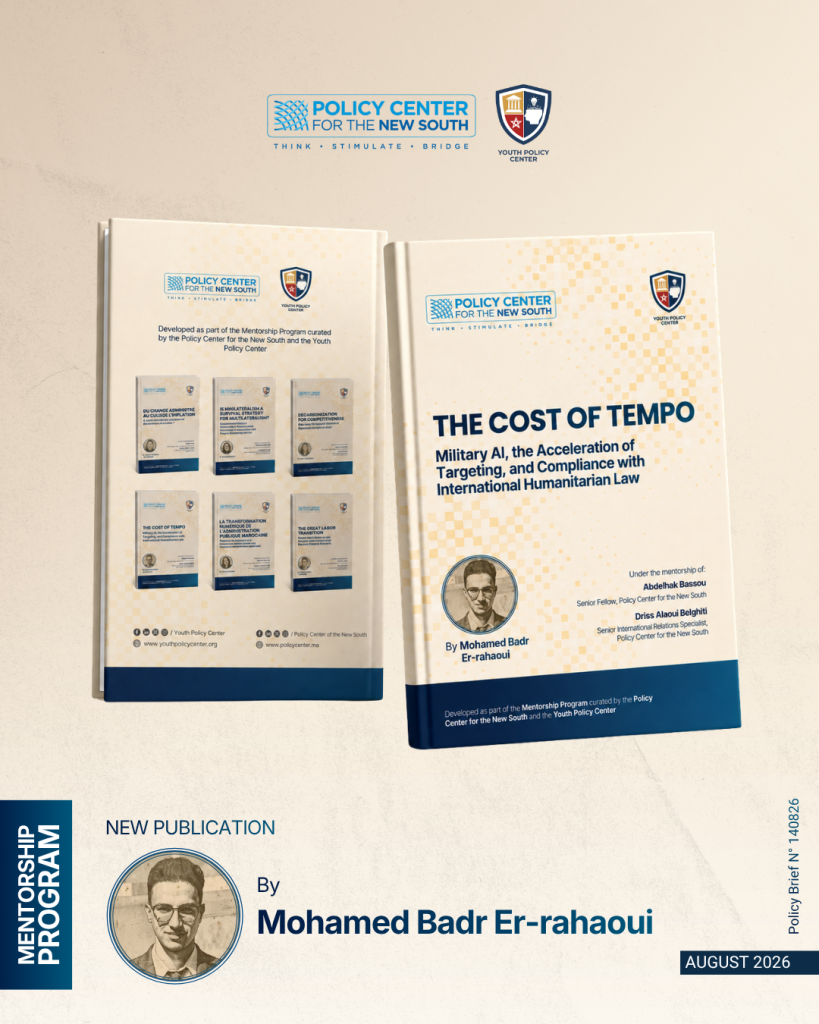
The Cost of Tempo: Military AI, the Acceleration of Targeting, and Compliance with International Humanitarian Law

This publication examines AI-assisted targeting systems through the lens of International Humanitarian Law, discussing automation bias, accountability, transparency, and meaningful human control while proposing safeguards for responsible military AI governance.

The Cost of Tempo: Military AI, the Acceleration of Targeting, and Compliance with International Humanitarian Law Lire la suite »

DU CHANGE administré au ciblage de l’inflation : à quelles conditions poursuivre la flexibilisation du dirham ?

The brief analyzes Morocco’s gradual transition toward an inflation-targeting framework and evaluates the institutional, economic, and communication mechanisms required to ensure a successful reform, emphasizing central bank credibility, transparency, and policy coordination.

DU CHANGE administré au ciblage de l’inflation : à quelles conditions poursuivre la flexibilisation du dirham ? Lire la suite »

La transformation numérique de l’administration publique marocaine : Dépasser le paradoxe de la connectivité pour garantir une inclusion administrative équitable

This Policy Brief argues that digital connectivity alone is insufficient to achieve administrative inclusion. It proposes multilingual voice assistance, local digital mediation centers, mobile assistance units, and a human-centered « phygital » approach combining digital innovation with accessible in-person services.

La transformation numérique de l’administration publique marocaine : Dépasser le paradoxe de la connectivité pour garantir une inclusion administrative équitable Lire la suite »

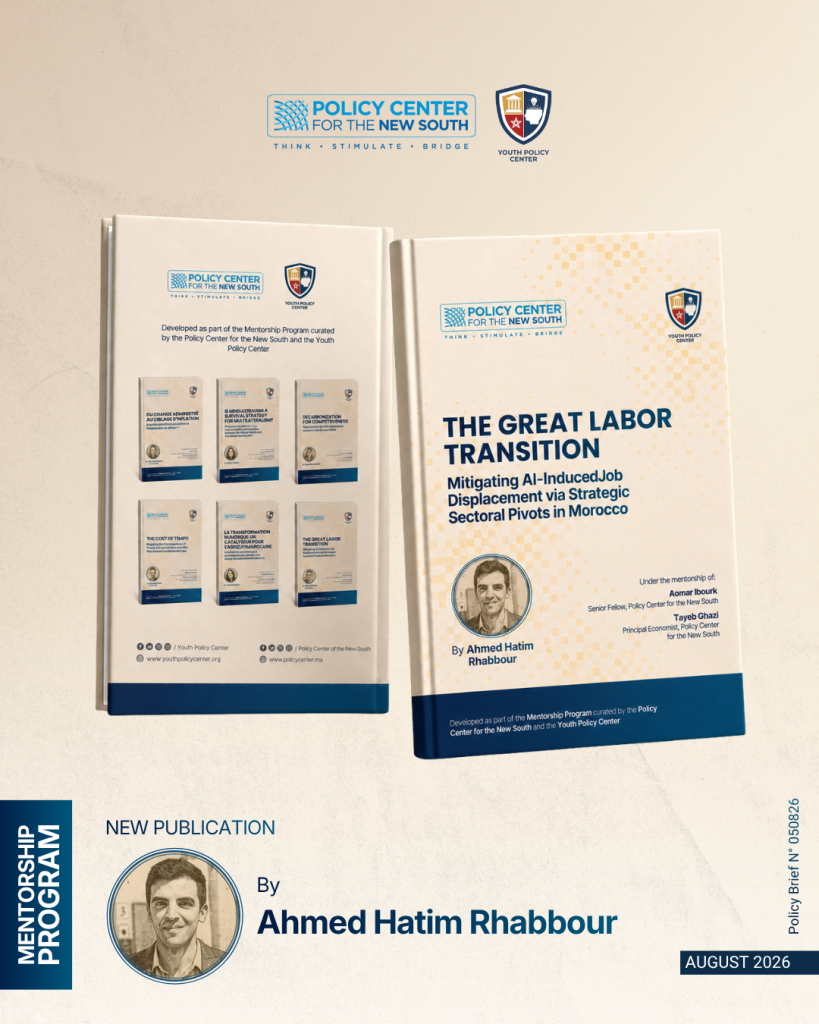
The Great Labor Transition: Mitigating AI-Induced Job Displacement via Strategic Sectoral Pivots in Morocco

This policy brief analyzes the expected impact of artificial intelligence on Morocco’s labor market and highlights the sectors most exposed to technological disruption. Rather than focusing solely on risks, it outlines evidence-based recommendations for workforce reskilling, sectoral transitions, and investment in emerging industries such as renewable energy and AI services. The publication aims to contribute

The Great Labor Transition: Mitigating AI-Induced Job Displacement via Strategic Sectoral Pivots in Morocco Lire la suite »

DO YOUTH TRUST POLITICAL INSTITUTIONS

Do Youth Trust Political Institutions? Evidence From Denmark, Norway, and Morocco explores how young people perceive political institutions, trust, and opportunities for engagement across three distinct political contexts. The study adopts a cross-cultural comparative approach, drawing on qualitative survey data from youth in Denmark and Norway, alongside a large national youth dataset from Morocco. By

DO YOUTH TRUST POLITICAL INSTITUTIONS Lire la suite »

When German Politics Shifts: The Impacts of the Far-Right Surge on Morocco

The debate on migration in Germany is taking a major turn with the alliance between the CDU and the AfD, influencing European migration policies and, consequently, relations with Morocco. This document examines how Germany’s proposed migration reforms impact Morocco, considering migration realities, cooperation dynamics, and economic challenges. As a country of origin, transit, and destination

When German Politics Shifts: The Impacts of the Far-Right Surge on Morocco Lire la suite »